Assessment of Posterior Belief in Hypotheses
Level 11
—
Oct 27, 2025
🚧 Content Planning
Initial research phase. Tools and protocols are being defined.
Thinking, Fast and Slow
Daniel Kahneman: Thinking, Fast and Slow | Talks at Google · Latest Video
Strategic Rationale
For a 65-year-old engaging with the topic 'Assessment of Posterior Belief in Hypotheses,' the focus shifts from purely mathematical formalism to the practical application of probabilistic thinking, critical evaluation of evidence, and awareness of cognitive biases that influence belief updating. The core principles guiding this selection are:
- Relevance & Application: Tools must directly connect abstract concepts to a 65-year-old's real-world decisions (e.g., health choices, financial planning, evaluating news, understanding social dynamics), fostering practical wisdom and informed judgment.
- Cognitive Agility & Bias Mitigation: The tools should offer engaging, accessible content that challenges cognitive functions and helps identify/overcome inherent biases, promoting more rational and adaptive belief updating.
- Empowered Reflection & Deliberation: Encourage structured thought processes and personal reflection on one's own prior beliefs and how they are (or should be) adjusted by new evidence, enhancing self-awareness and deliberate reasoning.
Primary Item Justification: Daniel Kahneman's 'Thinking, Fast and Slow' is selected as the best-in-class tool. While not a Bayesian statistics textbook, it is a seminal work in behavioral economics and cognitive psychology that provides the essential cognitive foundation for understanding how humans form judgments, make decisions, and, crucially, how their beliefs are (or are not) updated by new evidence. It eloquently introduces System 1 (fast, intuitive) and System 2 (slow, deliberate) thinking, detailing the myriad cognitive biases that often lead to deviations from rational (Bayesian) belief updating. For a 65-year-old, understanding these fundamental psychological mechanisms is a critical precursor to appreciating the normative ideal of Bayesian assessment. It empowers them to:
- Recognize their own cognitive shortcuts and biases.
- Understand why their 'prior beliefs' might be flawed or resistant to change.
- Develop a more deliberate approach to evaluating new information and assessing its impact on their existing hypotheses.
- Apply these insights to real-world decisions, from health and finance to social interactions and media consumption.
This book provides maximum developmental leverage for this age group by enhancing metacognition and critical thinking, which are invaluable for navigating complex information environments and maintaining cognitive vitality.
Implementation Protocol for a 65-year-old:
- Read Actively & Reflectively: Engage with the book over several weeks or months, reading chapters at a comfortable pace. Use the 'Practical Decision-Making Journal' (recommended extra) to jot down personal reflections, examples from one's own life, or observations that illustrate the concepts (e.g., 'When did I use System 1 thinking today?', 'What prior belief did I hold that was challenged by new information?').
- Discuss and Share: Engage in discussions with peers, family, or book clubs about the concepts presented in the book. Articulating the ideas and debating examples helps solidify understanding and challenge personal biases. This is a powerful way to integrate new knowledge at this age.
- Apply to Daily Life: Consciously identify situations where System 1 and System 2 thinking are at play. When making a decision (big or small), pause to consider initial intuitions (prior belief), then actively seek out and evaluate new evidence, and deliberately consider how that evidence should update your belief in the different outcomes or hypotheses. Pay particular attention to avoiding common biases like confirmation bias or anchoring.
- Complement with Online Learning: Utilize the recommended 'Mindware: Critical Thinking for the Information Age' online course to gain a more structured and interactive understanding of critical thinking and probabilistic reasoning, applying the concepts learned from the book in a practical context. This structured learning provides reinforcement and exercises for applying the principles of belief assessment.
Primary Tool Tier 1 Selection
Thinking, Fast and Slow book cover
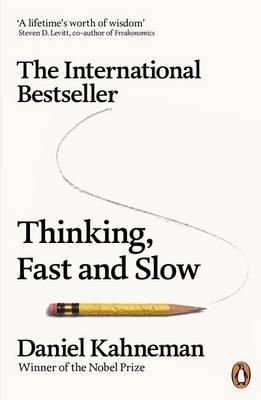
This book is foundational for understanding the psychological mechanisms behind human judgment and decision-making, which are direct precursors to 'Assessment of Posterior Belief in Hypotheses'. For a 65-year-old, it provides critical insights into how cognitive biases affect belief formation and updating. It doesn't teach Bayesian formulas, but it teaches the mindset and self-awareness required to appreciate why formal methods like Bayesian assessment are necessary. It enhances critical thinking, self-reflection, and the ability to evaluate information with a more nuanced understanding of human rationality, aligning perfectly with the principles of relevance, cognitive agility, and empowered deliberation for this age group.
Also Includes:
- Practical Decision-Making Journal (10.00 EUR) (Consumable) (Lifespan: 52 wks)
- Online Course: Mindware: Critical Thinking for the Information Age (Coursera/University of Michigan)
DIY / No-Tool Project (Tier 0)
A "No-Tool" project for this week is currently being designed.
Complete Ranked List3 options evaluated
Selected — Tier 1 (Club Pick)
This book is foundational for understanding the psychological mechanisms behind human judgment and decision-making, whi…
DIY / No-Cost Options
Explores the art and science of prediction, using real-world examples from politics to poker to illustrate how to evaluate uncertainty, interpret data, and improve forecasts.
This book is excellent for developing practical probabilistic thinking and data interpretation skills, which are highly relevant to assessing beliefs. However, for a 65-year-old focused on the foundational 'how' and 'why' of human belief formation and updating, 'Thinking, Fast and Slow' offers a more direct and accessible dive into the *cognitive processes and biases* that precede and often conflict with rational Bayesian assessment. While 'The Signal and the Noise' provides compelling real-world applications of statistical thinking, Kahneman's work provides a more fundamental understanding of the human mind's operations in forming judgments.
An accessible exploration of how mathematical thinking can illuminate everyday life, covering concepts like probability, statistics, and logic through engaging anecdotes and explanations.
This is a strong candidate for making mathematical and logical thinking accessible, which is certainly a component of assessing beliefs. It would serve well in building quantitative literacy. However, 'Thinking, Fast and Slow' directly addresses the *psychological processes of belief formation, the role of intuition versus deliberation, and cognitive biases*, which are more immediate and fundamental precursors to understanding the 'Assessment of Posterior Belief in Hypotheses' for a non-specialist 65-year-old. It focuses more on *how* people think about likelihoods and less on the underlying mathematical framework.
What's Next? (Child Topics)
"Assessment of Posterior Belief in Hypotheses" evolves into:
Posterior Probability of Individual Hypotheses
Explore Topic →Week 7535Comparative Posterior Belief (Odds and Bayes Factors)
Explore Topic →This dichotomy separates the assessment of posterior belief into quantifying the absolute probability of individual hypotheses versus quantifying the relative strength of belief between hypotheses using odds ratios or Bayes factors. Both are distinct and fundamental approaches to assessing posterior belief within a Bayesian framework.