Theoretical Implications and Conceptual Advancement
Level 11
—
Oct 27, 2025
🚧 Content Planning
Initial research phase. Tools and protocols are being defined.
Wondrium Annual All-Access Pass
Obsidian Tour for Beginners · Latest Video
Strategic Rationale
For a 73-year-old engaging with 'Theoretical Implications and Conceptual Advancement,' the focus shifts from primary discovery to profound synthesis, critical evaluation, and the integration of lifelong wisdom with new knowledge. The selected tools, Wondrium and Obsidian, form a synergistic ecosystem designed to maximize intellectual leverage at this developmental stage. Wondrium provides a rich, accessible stream of high-level academic content, offering diverse perspectives and deep dives into various theoretical frameworks. Its high production quality and self-paced format are ideal for maintaining cognitive engagement without pressure, directly supporting the understanding of 'Theoretical Implications.' Complementing this, Obsidian serves as a sophisticated Personal Knowledge Management System (PKMS). It empowers the individual to actively process, connect, and synthesize information, effectively building a 'second brain.' This is crucial for 'Conceptual Advancement,' allowing the 73-year-old to link disparate ideas, develop nuanced arguments, and formulate novel insights that reflect their unique accumulated experience. Together, these tools foster a dynamic learning and creation environment that respects the cognitive strengths and preferences of older adults, promoting continuous intellectual growth and the articulation of refined conceptual understandings.
Implementation Protocol for a 73-year-old:
- Start with Wondrium: Begin by selecting a Wondrium course (or series) that aligns deeply with pre-existing lifelong interests or an area where the individual has significant experience. This leverages their existing knowledge base for easier entry into complex theoretical discussions.
- Active Listening & Initial Note-Taking: While watching Wondrium lectures, use a simple method for initial note-taking. Focus on key terms, central arguments, and any questions that arise. This can be done digitally within a word processor or physically in a notebook.
- Transfer & Connect in Obsidian: After each lesson or module, transfer key insights and notes into Obsidian. Crucially, don't just copy. Rephrase in one's own words, identify connections to other ideas (from Wondrium or prior knowledge), and use Obsidian's bi-directional linking feature to create a 'knowledge graph.' For example, if a lecture discusses a specific sociological theory, link it to related philosophical concepts or historical events that come to mind.
- Reflective Journaling & Synthesis: Regularly use Obsidian for reflective journaling. Ask: 'What are the broader implications of this theory?', 'How does this concept challenge or confirm my own understanding/experience?', 'What new conceptual questions arise from this information?'. Use the graph view to visually identify clusters of ideas and unexpected connections.
- Develop 'Evergreen Notes': As concepts solidify, refine raw notes into 'Evergreen Notes' – concise, atomic notes that represent a single idea or argument. These become the building blocks for more advanced conceptual advancement and theoretical articulation.
- Engage with Community (Optional but Recommended): While not explicitly tool-driven, participation in online discussion forums (perhaps related to Wondrium topics or other intellectual communities) can provide an external sounding board for theoretical ideas developed within Obsidian, allowing for peer critique and collaborative conceptual refinement. This helps validate and expand upon personal theoretical insights.
- Regular Review & Expansion: Schedule regular times to review the Obsidian graph, revisit older notes, and identify new connections as more knowledge is acquired. This iterative process is key to continuous 'Conceptual Advancement'.
Primary Tools Tier 1 Selection
Wondrium Homepage Interface
The Wondrium Annual All-Access Pass is foundational for engaging with 'Theoretical Implications.' It provides unlimited access to a vast library of university-level courses, documentaries, and series presented by renowned experts. For a 73-year-old, Wondrium offers a highly accessible, self-paced, and intellectually stimulating environment to delve into complex theories across science, humanities, arts, and philosophy. The high production quality, engaging lectures, and breadth of topics facilitate deep cognitive engagement and the acquisition of diverse perspectives necessary to evaluate, critique, and understand the broader implications of various theoretical frameworks, without the pressure of formal academic settings. It's a world-class resource for continuous, high-level learning.
Also Includes:
- Quality Over-Ear Headphones (100.00 EUR)
- Ergonomic Tablet Stand (if using tablet) (30.00 EUR)
Obsidian Graph View
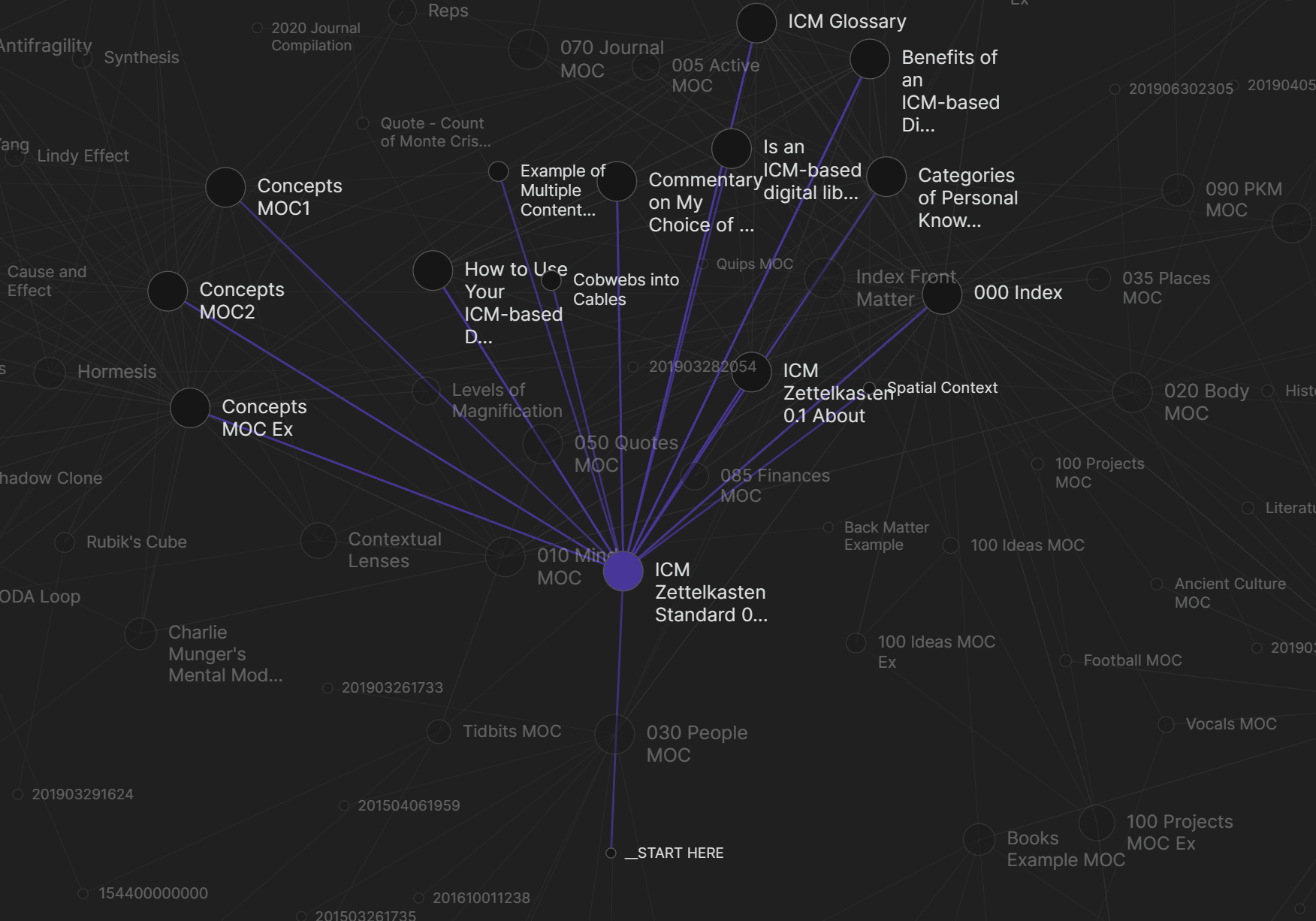
Obsidian is the ultimate tool for 'Conceptual Advancement.' While Wondrium provides the input, Obsidian provides the robust, flexible environment for a 73-year-old to process, connect, and synthesize that information into new insights. Its unique bi-directional linking and graph view allow for non-linear thought development, enabling the user to organically map theoretical connections, challenge existing concepts, and formulate new understandings based on a lifetime of accumulated wisdom. It acts as a digital workbench for generating and refining theoretical understanding, fostering critical reflection and synthetic thinking crucial for advancing concepts beyond mere absorption. Its local-first file storage also provides a sense of ownership and privacy for intellectual work.
Also Includes:
- Obsidian Sync Annual Subscription (96.00 EUR) (Consumable) (Lifespan: 52 wks)
- "Building a Second Brain: A Proven Method to Organize Your Digital Life and Unlock Your Creative Potential" by Tiago Forte (20.00 EUR)
DIY / No-Tool Project (Tier 0)
A "No-Tool" project for this week is currently being designed.
Complete Ranked List4 options evaluated
Selected — Tier 1 (Club Pick)
The Wondrium Annual All-Access Pass is foundational for engaging with 'Theoretical Implications.' It provides unlimited…
Obsidian is the ultimate tool for 'Conceptual Advancement.' While Wondrium provides the input, Obsidian provides the ro…
DIY / No-Cost Options
High-quality video lessons from world-renowned experts across various fields, focusing on their craft and insights.
While MasterClass offers inspiring content from experts, it typically focuses more on practical skills, personal development, or an artist's process, rather than deep academic theoretical implications or structured conceptual advancement. For a 73-year-old seeking to engage with theories at a high analytical level, MasterClass is more geared towards inspiration and specific skill acquisition than the rigorous synthesis and critique required for advancing concepts.
Direct access to a wide array of peer-reviewed scholarly articles and historical academic content.
Academic journal subscriptions provide direct access to cutting-edge theoretical research, which is excellent for 'Theoretical Implications.' However, for a 73-year-old, navigating raw academic literature can be overwhelming and time-consuming without structured pedagogical support or a framework for synthesis. It demands a high baseline of subject-matter expertise and lacks the guided learning and synthesis tools offered by Wondrium and Obsidian, making it less effective for active 'Conceptual Advancement' for most individuals at this age.
What's Next? (Child Topics)
"Theoretical Implications and Conceptual Advancement" evolves into:
Modification and Validation of Existing Theories
Explore Topic →Week 7919Creation and Introduction of Novel Theories
Explore Topic →This dichotomy distinguishes between contributions that refine, confirm, or challenge established theoretical frameworks (modification and validation) and those that propose entirely new theoretical constructs, models, or paradigms (creation and introduction).